
As the ice recedes from Ontario’s legendary French River each April, a brief, electric window opens—spring fishing season. For over four decades, we’ve guided anglers through these prime weeks, when post-spawn Walleye prowl rocky narrows, aggressive Pike ambush shallow bays, and the first Muskie of the year emerge from the depths. Whether you’re targeting trophy fish or building family memories, this guide combines hard-won local knowledge with seasonal strategy to help you make the most of French River’s world-class spring fishery.
In This Guide:
- Why the French River for Spring Fishing?
- Understanding Spring Fishing Seasons
- Target Species & Strategies
- Planning Your Trip
Why the French River for Spring Fishing?
The French River isn’t just another fishing destination, it’s a 110-kilometer waterway connecting Lake Nipissing to Georgian Bay. It was designated as a Canadian Heritage River and its unique geography creates a diverse habitat: from deep main channels and rocky shoals to shallow back bays and weed-lined narrows. Spring amplifies these advantages as warming water temperatures trigger aggressive feeding behavior across multiple species.
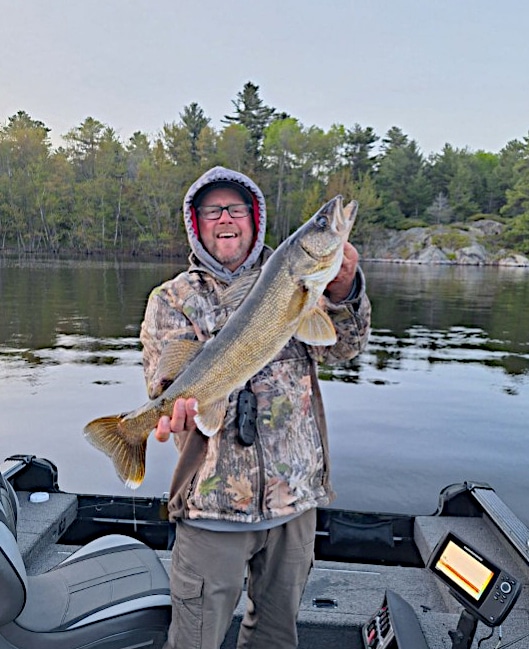
Unlike pressured southern Ontario lakes, the French River’s vast watershed and limited access points mean you’re fishing waters where trophy fish thrive with minimal angling pressure. The transition from ice-out to open water happens quickly here, typically between mid-April and early May, creating a narrow window when fish are concentrated, hungry, and accessible to anglers of all skill levels. Our lodge has tracked ice-out dates for over 40 years, and we’ve found late May to early June following ice-out consistently produces the year’s best Walleye action.
Understanding Spring Fishing Seasons on the French River
Seasonal Breakdown: What to Expect
Spring fishing on the French River is shaped by water temperature, spawning cycles, and shifting fish behavior. Success depends on timing your trip to match these natural patterns:
| Month | Water Temp (°C) & (°F) | Fish Behavior Highlights |
| Late April–Early May | 4–10°C
39.2–50°F |
Ice-out conditions. Walleye and pike complete spawning. Fish are shallow and sluggish but starting to feed. |
| Mid–Late May | 10–15°C
50–59°F |
Post-spawn activity intensifies. Pike and Walleye feed aggressively to recover condition. Bass and Walleye season opens 3rd Saturday of May. |
| June | 15–20°C
59–68°F |
Bass transition post-spawn with Smallmouth moving to deeper structure. Muskie season opens 3rd Saturday of June. All species active. |
The Ice-Out Window (Late April to Early May)
This is the French River at its most raw and productive. Water temperatures hover between 4–10°C (39.2–50°F), and Walleye that have just completed their spawn begin moving away from spawning grounds toward deeper water and current breaks. Northern Pike, having spawned even earlier in tributaries and shallow bays, are already in post-spawn feeding mode.

The challenge during ice-out is finding fishable water. Ice doesn’t retreat uniformly; it lingers in protected bays while main channels and wind-swept points open first. Target these early-opening areas where fish concentrate while waiting for the entire system to become accessible. Presentations should be slow and methodical; fish are lethargic in cold water and won’t chase fast-moving lures.
One strategy our guides have perfected is identifying the first shallow bays that clear of ice. These bays are typically southern-facing for maximum sun exposure. We’ve seen days where a single bay produces 30+ Walleye simply because it was 2–3 degrees warmer than surrounding water.
Post-Spawn Feeding Frenzy (Mid to Late May)
As water temperatures climb into the 10–15°C (50–59°F) range, the French River transforms. Walleye and Pike enter an aggressive feeding phase to replenish energy reserves depleted during spawning. This is when spring trophy fish are most vulnerable; they’re feeding heavily but haven’t yet dispersed into their summer patterns.
Walleye season opens on the third Saturday of May in our Zone 10, which typically aligns perfectly with peak post-spawn activity. Focus your efforts on transition zones: areas where shallow spawning grounds meet deeper water, rocky points with adjacent deep water, and current edges where Walleye ambush baitfish being swept downstream.
Pike become increasingly aggressive as water warms. They’ll smash lures with reckless abandon, often striking multiple times even after missing initial hooksets. This is the time to upsize your presentations; bigger spinnerbaits, larger swimbaits, and flashy spoons that create maximum vibration and visual appeal.
Early Summer Transition (June)
By June, water temperatures reach 15–20°C (59–68°F) and the spring bite transitions toward summer patterns. Smallmouth Bass move off their spawning beds and begin establishing territories along rocky shorelines and deeper structure. Largemouth remain in weedy bays but become more active as vegetation growth accelerates.
The third Saturday in June marks Muskie opener—one of the most anticipated dates on any serious angler’s calendar. Early-season Muskie are still in relatively shallow water, often cruising weed edges and rocky points in 8–15 feet of water. They’re aggressive.
We’ve found that the first two weeks of Muskie season produce more follows and strikes than any other time of year. Fish that might ignore lures by mid-summer will absolutely crush a well-placed bucktail in late June.
For comprehensive seasonal planning across all months, check out our Spring Fishing Tips.
Target Species & Strategy Deep-Dives
Walleye: The Spring Crown Jewel
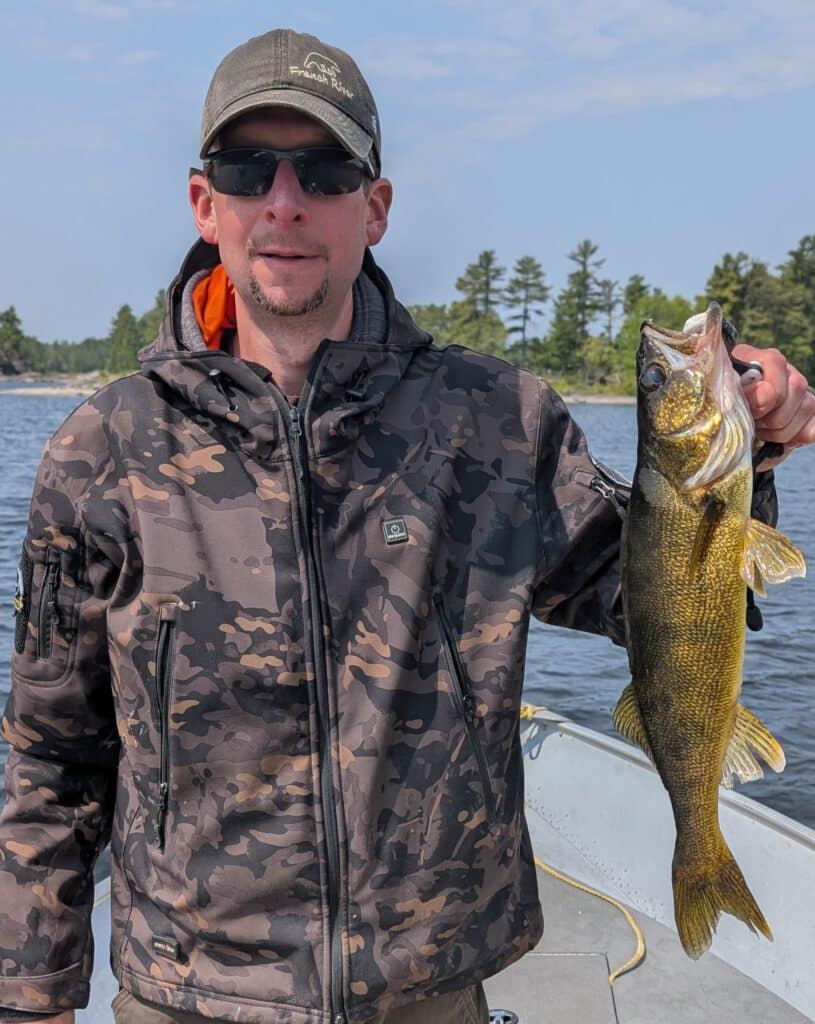
Spring Walleye fishing on the French River is legendary for good reason as these fish are concentrated, aggressive, and eager to feed after spawning. Success comes from understanding their post-spawn migration patterns and adjusting your approach to match daily conditions.
Prime Locations:
Walleye utilize specific structure types during spring. Focus on rocky points that extend from shorelines into deeper water, creating ambush zones where Walleye intercept baitfish. Current edges in the main river channel concentrate both Walleye and their forage. River mouths where tributaries enter the French River create mixing zones with ideal temperature and oxygen levels. Shallow rocky reefs in 6–12 feet of water warm quickly and attract both Walleye and the minnows they feed on.
Best Baits and Presentations:
Live minnows fished on a jig head remain the gold standard for spring Walleye. Use a 1/4 to 3/8 oz jig with a 3-4″ minnow, hooked through the lips. Work the jig slowly along bottom, using subtle lifts and pauses. Jigs tipped with soft plastics (e.g. Gulp! minnows, paddle tails) offer a scent and action combination that’s deadly in cold water. Slow-trolled crankbaits in natural colors (perch, shad, crawdad) cover water efficiently when searching for active fish—run them at 1–1.5 mph just off bottom.
Timing Your Approach:
Walleye are notorious low-light feeders and spring is no exception. The hour before sunset and the first hour after sunrise consistently produce the most active bites. Overcast days with light chop on the water extend feeding windows significantly. The best spring Walleye action happens during drizzly, gray afternoons when most anglers are off the water.
Pro Tip: In stained water (common during spring runoff), upsize your presentation and choose brighter colors. A chartreuse or white jig with a pink or white plastic trailer creates maximum visibility. In clear water, downsize to more natural colors and lighter jig weights to avoid spooking fish.
Our most successful spring Walleye pattern involves starting on main-lake points at dawn, then moving into back bays as the sun climbs and water temperatures rise. We’ve logged catches where this simple adjustment resulted in 40+ fish days when anglers staying in one location struggled to boat a dozen.
🔗 Spring Opening Walleye Season
🔗 Spawning Walleye: What You Should Know
Northern Pike: Aggressive Spring Predators
If Walleye are the technical challenge of spring fishing, Northern Pike are pure adrenaline. Post-spawn Pike are hungry, aggressive, and willing to attack lures that would intimidate them later in the season. They’re also accessible, holding in shallow water where they’re easily targeted by anglers of all skill levels.

Prime Locations:
Pike moves into the shallowest water available during spring. Target back bays with dark bottoms that absorb solar energy and warm quickly. Weed edges, even when vegetation is just beginning to emerge, hold Pike waiting to ambush baitfish. Shallow points with scattered boulders or wood provide ambush cover. Creek mouths and shallow channels connecting bays to the main river create natural funnels where Pike intercept moving prey.
Best Baits and Presentations:
Spinnerbaits: the do-everything spring Pike lure. Cast them to shoreline cover and retrieve with a steady, medium-speed retrieve. White, chartreuse, and firetiger color patterns excel in the French River’s tea-stained coloured water.
Large spoons: (red/white, five-of-diamonds patterns) flash aggressively and trigger reaction strikes—cast and retrieve with an erratic stop-and-go cadence.
Swimbaits: in 5–8″ sizes imitate the shiners and suckers that Pike feed on heavily during spring. Use paddle tail designs for maximum thump and vibration.
Tackle Considerations:
Pike fishing demands appropriate gear. Use medium-heavy rods (7’–7’6″) with fast action and enough backbone to drive hooks home. Pair with baitcasting reels spooled with 30–50 lb. braided line for sensitivity and hook-setting power. Always use a steel or heavy fluorocarbon leader (30–40 lb. minimum) to prevent bite-offs as Pike have rows of razor-sharp teeth that will slice through standard monofilament instantly.
Presentation Speed:
In water below 10°C (50°F), slow your retrieve significantly. Pike are cold-blooded and their metabolism dictates how aggressively they’ll pursue lures. As water temperatures climb into the 12–15°C (53.6–59°F) range, you can speed up presentations and trigger more reaction strikes. Vary your retrieve speed until you find what works—sometimes a lure crawled along bottom produces, other days a moderate speed and erratic retrieve (think varied starts-stops, twitches, and side-to-side action) triggers explosive strikes for cold water Pike.
One of our guides has a saying: “If you’re not getting your lure bit off occasionally, you’re not fishing shallow enough for spring Pike.” The biggest Pike we’ve seen caught by guests, a 44″ beast, came from water so shallow the angler could see the fish following before it struck.
🔗 French River Spring Pike Fishing
Smallmouth & Largemouth Bass: Late Spring Opportunities
Bass season opens the third Saturday in May, which is means the spring Bass bite is compressed into late May and June. However, this timing often coincides with post-spawn Bass that are actively feeding and accessible in predictable locations. Yet, we highly recommend releasing pre-spawned Bass in May and early June.
Smallmouth Bass:
Smallmouth are the French River’s most abundant Bass species and thrive in the river’s rocky habitat. During late spring, focus on rocky shorelines with scattered boulders, points extending into deeper water, and the edges of shoals and reefs. Smallmouth prefer hard structure and are often found in 6–15 feet of water during this period.

Best Smallmouth Baits:
Tube jigs (3–4″) in green pumpkin, brown, or watermelon are deadly when hopped along rocky bottom. Jerkbaits (suspending models) work well over deeper structure—use a jerk-pause-jerk cadence that mimics wounded baitfish. Ned rigs (mushroom jighead with small soft stick bait) have become incredibly effective for finesse presentations. As water warms into June, topwater lures at dawn and dusk produce explosive surface strikes.
Largemouth Bass:
Largemouth occupy different habitat than their Smallmouth cousins, preferring weedy bays, lily pad fields, and areas with fallen timber or aquatic vegetation. They’re less abundant on the French River than Smallmouth but grow larger on average.

Best Largemouth Baits:
Texas-rigged soft plastics (creature baits, worms) fished through cover are reliable producers. Spinnerbaits retrieved along weed edges trigger reaction strikes. Shallow-running crankbaits in crawfish or shad patterns work well when Bass are active. By late June, topwater frogs over lily pads and weed mats create heart-stopping surface explosions.
Presentation Tips:
Match your presentation speed to water temperature and clarity. In clearer water, use natural colors and finesse presentations. In stained water, upsize your bait and choose brighter colors (chartreuse, white, black/blue). Bass are often tight to cover during spring.
Hint: Don’t be afraid to cast into the thick weeds where most anglers won’t risk losing their lures.
We’ve found that the week immediately following Bass opener produces the most consistent action. Bass have completed spawning but haven’t yet scattered into summer patterns. One memorable trip saw a father-son duo boat over 60 Smallmouth in a single day by methodically working a rocky shoreline with tube jigs, every single cast seemed to produce a fish.
🔗 Smallmouth Bass: Best Spots & Pro Tips
🔗 5 Simple Tips for Largemouth Bass
Muskie: The Apex Predator Awakens
Muskie season opens on the third Saturday in June, and early-season Muskie fishing on the French River offers some of the year’s best opportunities. These apex predators are still in relatively shallow water, actively feeding, and haven’t yet been pressured by anglers for months.

Prime Locations:
Early-season Muskie patrol shallow to mid-depth structure. Focus on weed edges in 8–15 feet of water where emergent vegetation provides ambush cover. Rocky points with deep water access give Muskie staging areas to move between feeding and resting zones. Shallow bays that have warmed above 18°C (64.4°F) attract Muskie pursuing spawning Panfish and Suckers. Submerged timber and boulder fields provide additional structure that Muskie use to corner prey.
Best Baits and Presentations:
Bucktail spinners (double 10s, magnums) are the workhorse lure of Muskie fishing—cast to structure and retrieve with a fast, steady cadence that keeps blades thumping. Glide baits worked with a rhythmic side-to-side gliding action mimic dying or injured baitfish. Topwater lures (prop baits, walk-the-dog style) create explosive surface strikes when fished at dawn, dusk, or during overcast conditions. Large soft plastics on heavy jigheads allow you to probe deeper structure while maintaining an enticing swimming action.
The Figure-8:
Never retrieve a Muskie lure directly to the boat and lift it from the water. Always finish every retrieve with a figure-8 maneuver—plunging the lure deep beside the boat and sweeping it in a figure-8 pattern. Muskie commonly follow lures to boatside, and the figure-8 triggers strikes from fish that were tracking but hadn’t committed. This single technique probably doubles catch rates for serious Muskie anglers.
Tackle Requirements:
Muskie fishing demands heavy gear. Use 8’–9′ heavy-action rods designed specifically for Muskie fishing, paired with large baitcasting reels with strong drag systems. Spool with 80–100 lb. braided line for strength and sensitivity. Use heavy wire or fluorocarbon leaders rated for 100+ lbs. Muskie teeth and gill plates are like razors and will destroy inadequate terminal tackle.
Patience and Persistence:
Muskie fishing tests your patience. The often-cited “10,000 casts per fish” statistic may be exaggerated, but Muskies are the ultimate challenge in freshwater angling. Spring offers your best odds, but you still need persistence. Fish hard, stay focused, and work structure thoroughly. When a Muskie finally strikes, the adrenaline rush makes every blank day worthwhile.
Our most experienced Muskie guide describes early-season fishing as “chess, not checkers.” He’s learned to identify specific boulders and weed clumps that consistently hold fish year after year. His best day ever—three legal Muskie including a 48″ giant—came from repeatedly working a 200-yard stretch of weed edge that most anglers would pass by after a few casts.
🔗 Spring Muskie Fishing on the French River
🔗 Navigating Weed Lines for Muskies
Your Spring Fishing Adventure Starts Here
The French River’s spring fishery offers something rare in modern angling: abundant trophy fish, diverse species opportunities, and waters that still feel wild and untouched. From the aggressive post-spawn Walleye bite in late May to explosive Pike action in shallow bays, spring delivers the year’s most dynamic fishing in a compressed window of opportunity.
Success on the French River comes down to understanding seasonal patterns, matching your tactics to current conditions, and positioning yourself on productive water. The strategies outlined in this guide represent decades of on-the-water experience—hard-won knowledge that separates average days from exceptional ones.
Whether you’re planning your first trip to the French River or returning for another season, Ontario’s spring fishing rewards preparation and persistence. Soon, spring ice will be receding, water temperatures will be climbing, and trophy fish will be feeding aggressively. Your next personal best is waiting.
Ready to experience world-class spring fishing?
Bear’s Den Lodge offers the perfect base camp with over 40 years of guiding experience, comfortable accommodations, and immediate access to prime French River waters. Our team can help you plan your trip, choose the right dates, and provide the local knowledge that maximizes your time on the water.
🔗 Explore Our Spring Fishing Packages
🔗 Contact Us: 705-857-2757 | bearsdenfishing@gmail.com for Availability & Book Your Trip
In our next guide, we’ll cover essential gear selection, Ontario fishing regulations, trip planning logistics, and answers to frequently asked questions about spring fishing on the French River.
Tight lines,
Joe Barefoot, M.B., Outdoor Writer and Nationally Published Author, Photographer, & Poet. A member of the Professional Outdoor Media Association of Canada.